How Corrugated Baffle Design Improves Grease Capture Efficiency
Introduction: The Design Inside a Filter Makes the Difference
baffle grease filters | Trustifiltor
At first glance, many commercial kitchen baffle filters may look similar. Most products use stainless steel construction and a similar overall appearance.
How Does a Baffle Filter Capture Grease?
A baffle filter works by changing the direction of airflow inside the filter.
When hot exhaust air containing grease particles passes through the baffle structure, the airflow direction changes multiple times. Because grease particles have greater inertia than air, they cannot follow every airflow change. They collide with the stainless steel surfaces, separate from the air stream, and drain away.
The efficiency of this process depends on several factors:
-
Internal baffle structure;
-
Airflow path design;
-
Surface contact area;
-
Pressure drop control.
A well-designed baffle filter improves grease separation without creating unnecessary resistance.
Why Corrugated Baffle Design Improves Grease Capture
Traditional flat baffle designs provide limited airflow disturbance. A corrugated or wave-pattern baffle surface creates additional changes in airflow direction and increases interaction between grease particles and the metal surface.
This design helps to:
1. Increase Grease Particle Separation
The wave-pattern structure creates more opportunities for grease particles to impact the stainless steel surface.
More effective contact helps improve grease separation efficiency and reduces grease passing into the exhaust duct system.
2. Improve Grease Capture Efficiency
Better airflow control allows the filter to capture more grease particles while maintaining stable ventilation performance.
This helps:
-
Keep exhaust ducts cleaner;
-
Reduce grease accumulation;
-
Lower cleaning frequency;
-
Improve overall kitchen hygiene.
3. Reduce Grease Carryover
One of the key purposes of a commercial kitchen grease filter is preventing excessive grease from entering downstream ventilation systems.
An optimized baffle design helps separate grease at the filter stage, protecting the exhaust system and reducing maintenance requirements.
Balancing Filtration Efficiency and Pressure Drop
A common misunderstanding is that higher filtration efficiency always requires higher resistance.
In reality, an effective grease filter design should balance:
-
Grease capture performance
-
Airflow efficiency;
-
Energy consumption.
A filter with excessive resistance can increase the workload of exhaust fans, resulting in higher energy consumption and reduced system efficiency.
Trustifiltor baffle filters are designed to provide efficient grease separation while maintaining lower pressure drop performance.
This balance helps commercial kitchens achieve reliable filtration without unnecessary airflow restriction.
Why Low Pressure Drop Matters for Commercial Kitchens
Commercial kitchens often operate for long hours every day. Small differences in pressure drop can create significant differences in operating costs over time.
A lower pressure drop design can help:
-
Reduce fan energy consumption;
-
Maintain stable airflow;
-
Improve ventilation system efficiency;
-
Support long-term cost control.
For kitchen equipment manufacturers and HVAC system suppliers, filter performance affects not only the product itself but also the overall customer experience.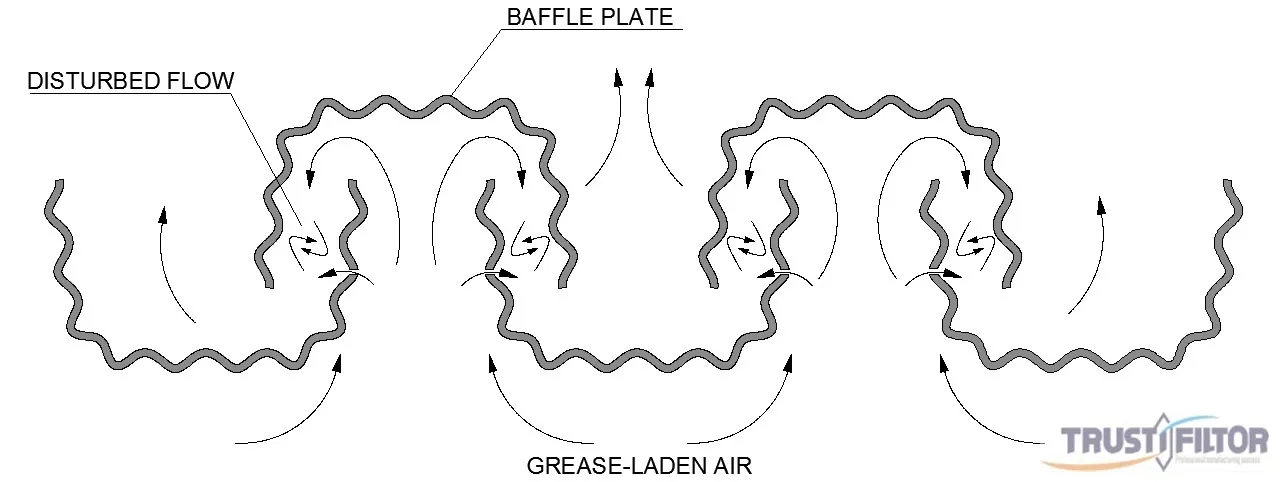
Stainless Steel Construction for Long-Term Performance
Filtration performance is only one part of a reliable grease filter.
Commercial kitchen environments require filters that can withstand:
-
High temperatures;
-
Grease exposure;
-
Frequent cleaning;
-
Long-term operation.
-
High-quality stainless steel construction provides:
-
Corrosion resistance;
-
Structural durability;
-
Better performance after repeated washing;
-
Longer service life.
A reliable baffle filter should maintain consistent performance throughout its operating life.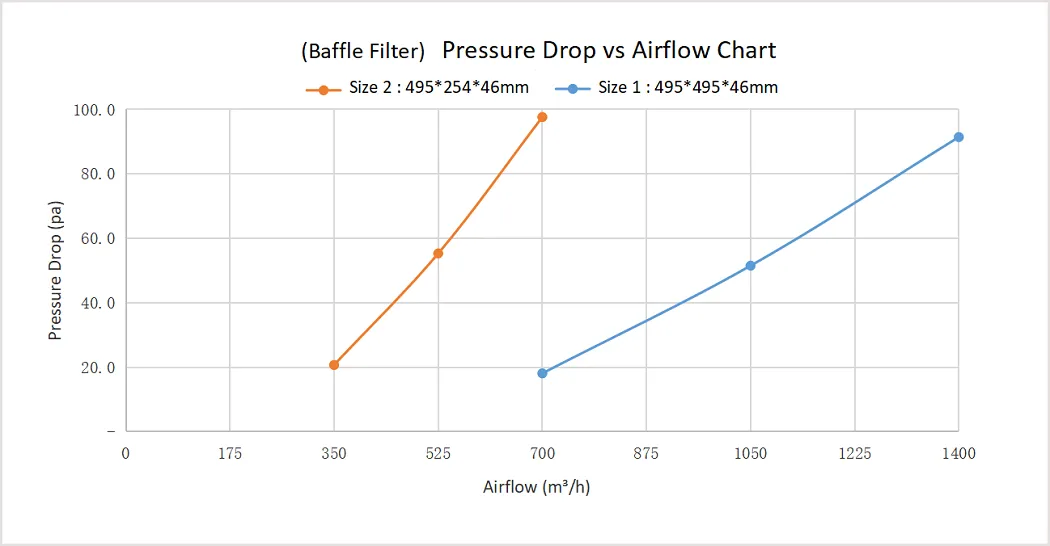
What Should Buyers Consider When Selecting a Baffle Filter?
Before choosing a grease filter supplier, professional buyers should evaluate more than appearance and price.
Important questions include:
1. Does the filter design improve grease separation?
The internal structure is critical to filtration performance.
2. What is the pressure drop performance?
Lower resistance can improve system efficiency.
3. Is the product suitable for long-term commercial use?
Material quality and structural stability directly affect service life.
4. Can the supplier support OEM requirements?
For kitchen hood manufacturers and ventilation system companies, customization capability and supply reliability are important factors.
Need a Baffle Filter Solution Designed for Your Application?
Every commercial kitchen exhaust system has different requirements depending on airflow, hood design, operating conditions, and maintenance expectations.
Choosing the right baffle filter is not only about selecting a standard product — it is about finding a filtration solution that matches your system performance requirements.
At Trustifiltor, we work with kitchen equipment manufacturers, HVAC companies, and filtration distributors to provide:
UL 1046 certified baffle filters;
Customized sizes and specifications;
Optimized designs for grease capture and airflow performance;
Reliable OEM manufacturing support.
If you are evaluating a new grease filter design, replacing an existing supplier, or looking for a customized filtration solution, our engineering team is ready to discuss your requirements.
Contact Trustifiltor to explore the right baffle filter solution for your application.